Europe’s largest street art festival Upfest returns to Bristol in 2020

The main event will now be held on 30th and 31st of May.

Upfest is back next year and this time it has added a brand new location to the lineup in South Bristol.

In addition, the organisers of Europe’s largest street art festival have moved the dates forward for 2020.

The street artwork will be painted between the 16th and 27th of May before the main event itself takes place on 30th and 31st of May.

The final day of public viewing will be on June 1st.

Upfest will also take over a new huge venue, Greville Smyth Park

Upfest will now also take over the entirety of Greville Smyth Park in addition to its original, neighbouring venue, The Tobacco Factory.

The festival took a break in 2019 after celebrating its 10th anniversary the previous year with a Simpsons theme.

The event attracts 400 artists from around the world and draws more than 50,000 visitors to Bedminster.

Organisers say it costs £125,000 to run Upfest and fundraising is often needed to help cover costs like artists’ materials, insurance, first aid and cleaning.

Artist registration opens on December 1st.

Bristol becomes first UK city to ban diesel cars

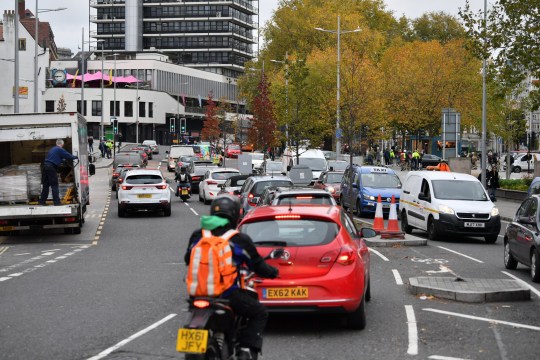
Bristol could become the UK city to ban diesel cars from entering the city centre in a dramatic bid to cut air pollution. The local authority approved plans to impose a clean air zone at a cabinet meeting on Tuesday night. It means privately owned diesel cars won’t be allowed in certain central areas between 7am and 3pm, every day of the week. The scheme, which needs government approval, is due to start in 2021. Commercial diesel vehicles such as buses and delivery trucks will be charged £9 to enter the exclusion zone, but this won’t be an option for ordinary drivers. Under the plans, even newer, cleaner diesels would be prohibited, despite the fact many are more environmentally-friendly than older petrol cars.

As well as banning diesels, the clean air plans include introducing a vehicle scrappage scheme to help drivers replace diesels with petrol or hybrid and electric cars.

Bristol has long suffered from poor air quality, particularly from high levels of nitrogen dioxide (NO2). It is under a legal obligation to reduce air pollution but has twice missed government deadlines for providing details of a clean air zone. Bristol mayor Marvis Rees said the proposed ‘Clean Air Zone’ would help the city meet its emissions targets by 2025 and ‘protect vulnerable residents’ from pollution. The ban will be enforced using a number plate recognition system, similar to the one used to police London’s congestion charge. Pete Simson, BBC Radio Bristol politics reporter, said: “It’s hard to overstate how significant a policy intervention this is.

“This is a first, no other UK city is introducing an outright diesel ban, and it will require the government to introduce new legislation.’ Although some local residents welcomed the idea, motoring groups have warned the plan could increase congestion outside the city centre and put unfair financial pressures on people who can’t afford to switch from diesel. Nicholas Lyes, head of roads policy at the RAC, said: ‘Major routes into, out of, and even around the city would become out of bounds, with diesel vehicles forced onto other roads, which risks causing congestion problems where they don’t exist at the moment. ‘Many drivers are faced with having to use their car for journeys in and around the city simply because there is no affordable, reliable alternatives. This would become more difficult under these plans. ‘Then there are other practical considerations. Some drivers of diesel cars who are locked into finance packages may face a significant penalty to exit their contract early.

‘There will also be drivers of older vehicles who are faced with having to give up their vehicles and switch to something different – which could be extremely costly.’ Millions were encouraged to buy diesels by Tony Blair’s government because they are more fuel-efficient and emit less carbon dioxide than But scientists and governments around the world have since changed their tune as diesels emit more nitrogen oxides, which can harm health. The Volkswagen diesel emissions scandal in 2015 has also led to accusations that car-makers have been cheating tests and downplaying the damaging effects of toxic emissions.

Athlete Nick Butter runs a marathon in every country

A British man has become the first person to run a marathon in every country in the world.

Nick Butter, 30, from Bristol, has run 196 marathons in 196 countries after starting in Canada in January 2018 and finishing in Greece on Sunday.

He was inspired to do it to raise funds for Prostate Cancer UK after a friend was diagnosed with the disease.

Mr Butter said he was “overwhelmed” to have finished, after he crossed the finishing line of the Athens marathon.

He said he was “very tired” after completing the challenge, which took 674 days and involved visiting an average of just over two countries a week.

“In one sense it was just another finishing line, but in a bigger sense I’ve been visualising it, and finishing in that stadium in Athens was so special,” he said.

He chose Athens for his final run due to it being “the home of the marathon”.

Mr Butter, originally from Dorset, crossed the line with his friend Kevin Webber, who has prostate cancer and who inspired him to take up the challenge.

So far, he has raised more than £65,000 of his £250,000 target for Prostate Cancer UK.

During his epic feat, Mr Butter said he got through 10 passports, took 455 flights, ran through 15 war zones and was mugged twice.

He said he was now planning to continue running “one or two marathons a week” because he “loves to run”.

The former banker said the number of 196 countries was based on 193 identified as sovereign states by the United Nations plus three others not officially recognised.

But he explained he had actually run 211 marathons, in order to “future proof” the record, by visiting places that might be classed as separate countries in the future.

“For example I ran a marathon in Hong Kong as well as in China,” he said.

Bristol becomes first UK city to ban diesel cars

Bristol becomes first UK city to ban diesel cars

Posted on

Share Button
Twitter
Facebook
Pinterest
Linkedin

Bristol could become the UK city to ban diesel cars from entering the city centre in a dramatic bid to cut air pollution. The local authority approved plans to impose a clean air zone at a cabinet meeting on Tuesday night. It means privately owned diesel cars won’t be allowed in certain central areas between 7am and 3pm, every day of the week. The scheme, which needs government approval, is due to start in 2021. Commercial diesel vehicles such as buses and delivery trucks will be charged £9 to enter the exclusion zone, but this won’t be an option for ordinary drivers. Under the plans, even newer, cleaner diesels would be prohibited, despite the fact many are more environmentally-friendly than older petrol cars.

As well as banning diesels, the clean air plans include introducing a vehicle scrappage scheme to help drivers replace diesels with petrol or hybrid and electric cars.

Bristol has long suffered from poor air quality, particularly from high levels of nitrogen dioxide (NO2). It is under a legal obligation to reduce air pollution but has twice missed government deadlines for providing details of a clean air zone. Bristol mayor Marvis Rees said the proposed ‘Clean Air Zone’ would help the city meet its emissions targets by 2025 and ‘protect vulnerable residents’ from pollution. The ban will be enforced using a number plate recognition system, similar to the one used to police London’s congestion charge. Pete Simson, BBC Radio Bristol politics reporter, said: “It’s hard to overstate how significant a policy intervention this is.

“This is a first, no other UK city is introducing an outright diesel ban, and it will require the government to introduce new legislation.’ Although some local residents welcomed the idea, motoring groups have warned the plan could increase congestion outside the city centre and put unfair financial pressures on people who can’t afford to switch from diesel. Nicholas Lyes, head of roads policy at the RAC, said: ‘Major routes into, out of, and even around the city would become out of bounds, with diesel vehicles forced onto other roads, which risks causing congestion problems where they don’t exist at the moment. ‘Many drivers are faced with having to use their car for journeys in and around the city simply because there is no affordable, reliable alternatives. This would become more difficult under these plans. ‘Then there are other practical considerations. Some drivers of diesel cars who are locked into finance packages may face a significant penalty to exit their contract early.

‘There will also be drivers of older vehicles who are faced with having to give up their vehicles and switch to something different – which could be extremely costly.’ Millions were encouraged to buy diesels by Tony Blair’s government because they are more fuel-efficient and emit less carbon dioxide than But scientists and governments around the world have since changed their tune as diesels emit more nitrogen oxides, which can harm health. The Volkswagen diesel emissions scandal in 2015 has also led to accusations that car-makers have been cheating tests and downplaying the damaging effects of toxic emissions.

Athlete Nick Butter runs a marathon in every country

Athlete Nick Butter runs a marathon in every country

Posted on

Share Button
Twitter
Facebook
Pinterest
Linkedin

A British man has become the first person to run a marathon in every country in the world.

Nick Butter, 30, from Bristol, has run 196 marathons in 196 countries after starting in Canada in January 2018 and finishing in Greece on Sunday.

He was inspired to do it to raise funds for Prostate Cancer UK after a friend was diagnosed with the disease.

Mr Butter said he was “overwhelmed” to have finished, after he crossed the finishing line of the Athens marathon.

He said he was “very tired” after completing the challenge, which took 674 days and involved visiting an average of just over two countries a week.

“In one sense it was just another finishing line, but in a bigger sense I’ve been visualising it, and finishing in that stadium in Athens was so special,” he said.

He chose Athens for his final run due to it being “the home of the marathon”.

Mr Butter, originally from Dorset, crossed the line with his friend Kevin Webber, who has prostate cancer and who inspired him to take up the challenge.

So far, he has raised more than £65,000 of his £250,000 target for Prostate Cancer UK.

During his epic feat, Mr Butter said he got through 10 passports, took 455 flights, ran through 15 war zones and was mugged twice.

He said he was now planning to continue running “one or two marathons a week” because he “loves to run”.

The former banker said the number of 196 countries was based on 193 identified as sovereign states by the United Nations plus three others not officially recognised.

But he explained he had actually run 211 marathons, in order to “future proof” the record, by visiting places that might be classed as separate countries in the future.

“For example I ran a marathon in Hong Kong as well as in China,” he said.

Europe’s largest street art festival Upfest returns to Bristol in 2020

Europe’s largest street art festival Upfest returns to Bristol in 2020

Posted on

Share Button
Twitter
Facebook
Pinterest
Linkedin

The main event will now be held on 30th and 31st of May.

Upfest is back next year and this time it has added a brand new location to the lineup in South Bristol.

In addition, the organisers of Europe’s largest street art festival have moved the dates forward for 2020.

The street artwork will be painted between the 16th and 27th of May before the main event itself takes place on 30th and 31st of May.

The final day of public viewing will be on June 1st.

Upfest will also take over a new huge venue, Greville Smyth Park

Upfest will now also take over the entirety of Greville Smyth Park in addition to its original, neighbouring venue, The Tobacco Factory.

The festival took a break in 2019 after celebrating its 10th anniversary the previous year with a Simpsons theme.

The event attracts 400 artists from around the world and draws more than 50,000 visitors to Bedminster.

Organisers say it costs £125,000 to run Upfest and fundraising is often needed to help cover costs like artists’ materials, insurance, first aid and cleaning.

Artist registration opens on December 1st.

Share Button
Twitter

Stunning new timelapse video of Bristol created from 200 hours of footage

Adie White describes it as a “little project”, but this little project has taken him a year of work in his spare time.

The 41-year-old from Whitchurch, also known as The Bristol Nomad, has condensed 200 hours of photography – more than 12,000 individual photos – into a new stunning timelapse video.

“I wanted to create a homage to the city that I love that would hopefully entice others to visit or evoke great memories for Bristolians that have left or people that have already spent time here.

Adie’s film – called Bristol 247•365 – takes in scenes such as the Clifton Suspension Bridge, Temple Meads, Cabot Tower, Cabot Circus, the Balloon Fiesta, Ashton Gate and many more.

Adie added: “I like to use both mediums, photography and video. And plan a similar project in the near future looking deeper into Bristol and the many areas that make the city tick. From Stapleton to Sea Mills, from Bedminster to Brentry.

“I like the format of a ‘day in the life of Bristol’ as I think it shows a great vibe to the city and that there is always something going on.”

Watch the full film here:

[KGVID]http://www.bristolstuff2021.learningwithlouise.co.uk/bristolstuff2021/wp-content/uploads/2019/01/Bristol-247•365.mp4[/KGVID]


Stunning new timelapse video of Bristol created from 200 hours of footage

Stunning new timelapse video of Bristol created from 200 hours of footage

Posted on

Adie White describes it as a “little project”, but this little project has taken him a year of work in his spare time.

The 41-year-old from Whitchurch, also known as The Bristol Nomad, has condensed 200 hours of photography – more than 12,000 individual photos – into a new stunning timelapse video.

“I wanted to create a homage to the city that I love that would hopefully entice others to visit or evoke great memories for Bristolians that have left or people that have already spent time here.

Adie’s film – called Bristol 247•365 – takes in scenes such as the Clifton Suspension Bridge, Temple Meads, Cabot Tower, Cabot Circus, the Balloon Fiesta, Ashton Gate and many more.

Adie added: “I like to use both mediums, photography and video. And plan a similar project in the near future looking deeper into Bristol and the many areas that make the city tick. From Stapleton to Sea Mills, from Bedminster to Brentry.

“I like the format of a ‘day in the life of Bristol’ as I think it shows a great vibe to the city and that there is always something going on.”

Watch the full film here:MuteRemaining Time -6:41

Share Button
Twitter

Prince Harry and Meghan Markle to visit Bristol

The Duke and Duchess of Sussex are to visit Bristol.

Prince Harry and his wife Meghan Markle will tour the city on Friday, February 1, with at least two stops listed on the itinerary.

Kensington Palace said the royal couple will visit Bristol Old Vic and the Empire Boxing Gym as they “learn more about the city’s rich cultural history”.

The Duke and Duchess of Sussex
The Duke and Duchess of Sussex. 

A spokesperson for Kensington Palace added the couple, who are expecting their first child in the spring, were coming to Bristol to “meet members of the public”.

The Duke and Duchess of Sussex will visit Bristol on Friday, February 1, to meet members of the public, learn more about the city’s rich cultural history, and visit organisations supporting communities most in need.

The Duke and Duchess of Sussex will visit the Bristol Old Vic, where they will tour the recently renovated theatre.

Their Royal Highnesses will also visit Empire Fighting Chance, which aims to fight the impact of deprivation on young people’s lives through boxing.

– Kensington Palace spokesperson

Prince Harry and Meghan Markle to visit Bristol

Prince Harry and Meghan Markle to visit Bristol

Posted on

The Duke and Duchess of Sussex are to visit Bristol.

Prince Harry and his wife Meghan Markle will tour the city on Friday, February 1, with at least two stops listed on the itinerary.

Kensington Palace said the royal couple will visit Bristol Old Vic and the Empire Boxing Gym as they “learn more about the city’s rich cultural history”.

The Duke and Duchess of Sussex
The Duke and Duchess of Sussex. 

A spokesperson for Kensington Palace added the couple, who are expecting their first child in the spring, were coming to Bristol to “meet members of the public”.

The Duke and Duchess of Sussex will visit Bristol on Friday, February 1, to meet members of the public, learn more about the city’s rich cultural history, and visit organisations supporting communities most in need.

The Duke and Duchess of Sussex will visit the Bristol Old Vic, where they will tour the recently renovated theatre.

Their Royal Highnesses will also visit Empire Fighting Chance, which aims to fight the impact of deprivation on young people’s lives through boxing.

– Kensington Palace spokesperson